"I'll be very clear. I never make real estate recommendations ever. And I haven't in more than a decade and a half."
Erica Chapman, CEO of Gladiators & Titans, dropped this bomb at WorkSpaces, and the room went quiet. A real estate leader who doesn't make real estate recommendations? It sounds impossible. But as the panel discussion unfolded, her statement revealed something profound about how the most successful workplace leaders actually operate.
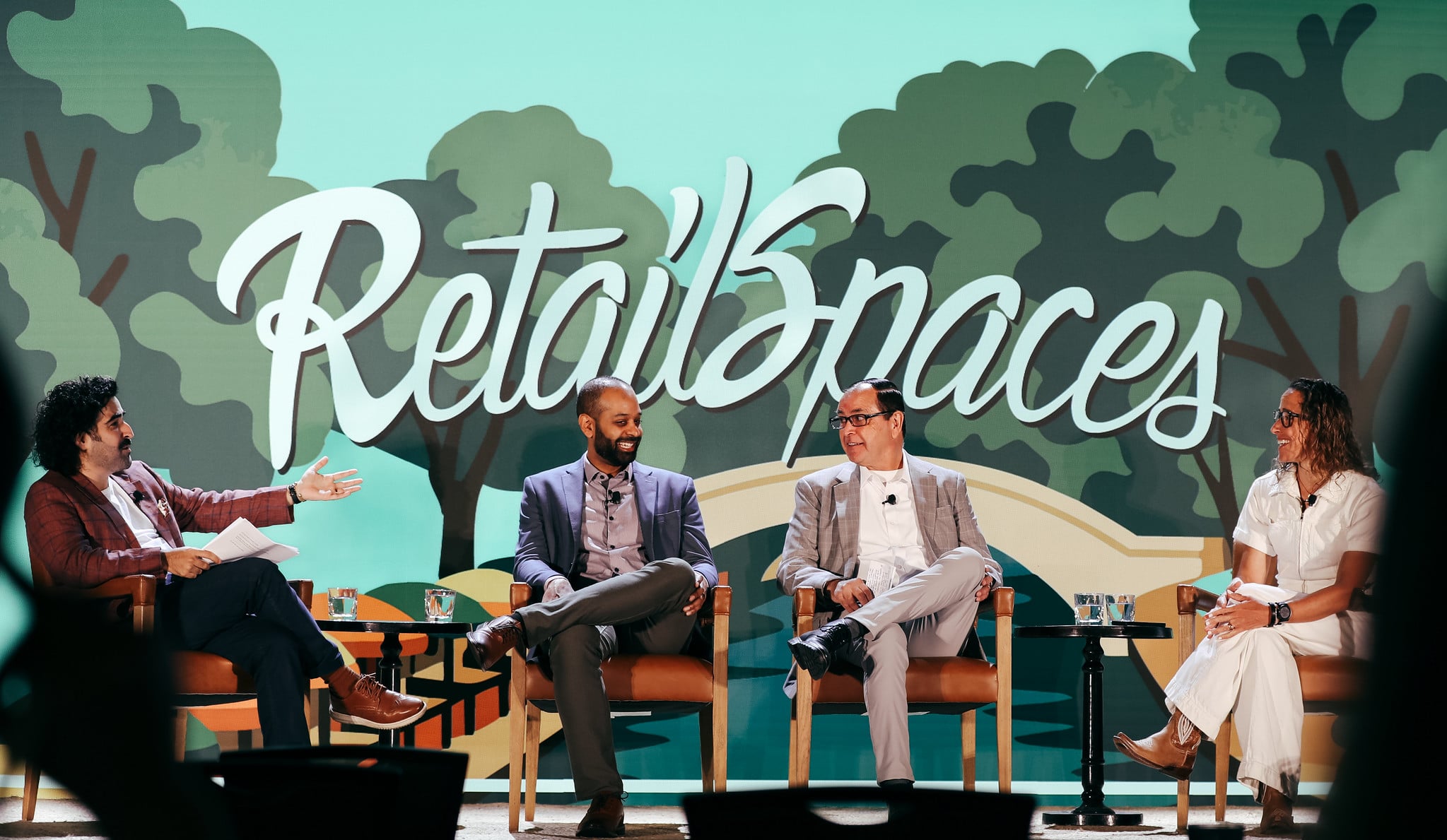
Phil Kirschner, Future of Work Expert at The Workline, moderated the conversation with Chapman, Lynn Baez (Enterprise VP of Facilities & Workplace at McKesson), and Frederico Egli (Head of Real Estate, US at IBM). The question seemed simple: Who owns the workplace? What emerged was far more interesting.
The Reporting Structure Doesn't Matter (But Access Does)
When pressed on what actually matters about where they sit organizationally, the panelists revealed something unexpected: the structure matters less than the access and influence it provides.
"Credibility and influence go hand in hand," Chapman explained. "I look at who has the most influence at the C-suite level. I don't care who I reported to, I just want the person that's going to trust me enough and be the voice at the table with the CEO."
For Baez at McKesson, the matrix structure brings both benefits and challenges. "It's matrixed for me because I have to blend within all of our business units, all of our partners: HR, IT, strategy, operations, risk, all of them. We have to matrix decisions together. At times that can become quite difficult for speed to execution and delivery because you have to have so much leading with influence."
Egli at IBM described their hybrid model: "We roll up to the operations, the area that eventually rolls up to finance, so it's connected to the CFO. We have the advantage to have our peers right next to us like procurement and IT. So it's good for us when we are presenting something and we are all aligned on that."
The Power of the Bill
A consistent theme emerged: whoever pays controls the decisions.
"Who's paying the bill is actually who's running the show," Egli explained about IBM's current structure. "Today they own this real estate, which is not great because they have their own view of only their business units. They do not have an overview of the entire portfolio and how can we optimize this."
He continued: "We are discussing maybe we should not charge those business units anymore, maybe we should charge on the bottom line for the corporation. So real estate will be the owners and the business units will have to present a case for us to understand if it's feasible or not."
Baez agreed on the influence of financial structures: "Who pays the bill really dictates a lot of the M&A that takes place. Making sure that all of your partners see the value that it's bringing, helping them on that journey. So when they're going to other voices, they can influence in a positive way the strategy that you're delivering."
Never Make Real Estate Recommendations
When Kirschner pushed on metrics and data, Chapman delivered what might be the panel's most provocative statement.
"I'll be very clear. I never make real estate recommendations ever. And I haven't in more than a decade and a half," she said. "I look at what's happening in the business today. What does business think they're trying to achieve? What do I think in that context? And then what are we going to recommend? That really calls out the problems we're trying to solve and gets to the outcome, which is of course real estate in the end."
The data she values most isn't typical real estate metrics: "The one thing I would ask for would be attrition impact and cost as an above-the-line item that is incorporated into a business case. Most attrition is tied to leadership. It's not necessarily tied to the state of the workplace. It's something that's extremely costly and should be a focus that is not being solved in the real estate recommendation."
For Egli at IBM, utilization data drives portfolio optimization, but not in traditional ways. "We're tracking badges. You don't know how long this person was there, what this person was doing. Now we're trying to be more granular on hotspots on the location to understand, okay, we need more meeting rooms or we need more X, Y, and Z instead of just workstations."
Purpose Over Mandates
At McKesson, Baez has fundamentally shifted their approach to workplace strategy.
"We've shifted a lot of our business cases modeling to support purpose as the first intent," she explained. "If we are going to adjust cultural norms, cultural behaviors, intended goals and outcomes, that's where we start. And then we build the model around it."
The impact has been dramatic. McKesson reduced their portfolio by 60% while converting most of it to meeting and event space. Instead of return-to-office mandates, they implemented "collaboration weeks."
"We said, let's talk to all of our most executive leaders of when, why you want to be where you want to be and let's build the environment to circle and foster that behavior," Baez shared. "Finding that executive buy-in, not just from one business unit or from one team as a steerco was pivotal to that success."
The Talent Pipeline Problem
Kirschner raised what many in the room were thinking: real estate struggles to attract new talent while other functions have robust university pipelines.
Baez's solution was direct. When McKesson went to market for an outsourcing partner, talent recruitment was built into the requirement. "We want you going out to college campuses, other areas, trades, and specifically the hospitality market. When they came back and didn't get shortlisted, we helped them understand, no, it was a requirement."
Chapman advocated for expanding what real estate does: "If you started with transactions and project management, look at what your company does and say, is there an opportunity for sustainability? Is there an opportunity for economic development and incentives? Business continuity? Security? Facilities? Those are all things that I've taken on."
Egli at IBM takes a different approach: "We give preference for internal hires for two reasons. One is less expensive, but second most important is that we want people that have knowledge of the business to come to real estate. It is easier for a person to learn real estate but already understand the company than to do otherwise."
The Uncomfortable Answer
Near the end, an audience member posed the devil's advocate question: Is real estate and workplace a special function?
The panel's response was unanimous: No.
"It doesn't really matter where you sit," Chapman clarified. "What matters is how effectively you're working together and whether you're actually moving the needle on what the business cares about."
The organizations succeeding at workplace strategy have moved past the ownership debate. They've accepted that structure will vary, reporting lines will shift, and that's fine as long as workplace leaders can prove business value and build cross-functional influence.
The question isn't who owns the workplace. It's who's accountable for workplace outcomes and whether they have the authority to deliver them.
Watch his full talk below 👇
Want to be in the room for conversations like this?
Request an invite to WorkSpaces →


-3.png)





-May-04-2026-11-19-05-8005-AM.png)

-1.png)
Comments